
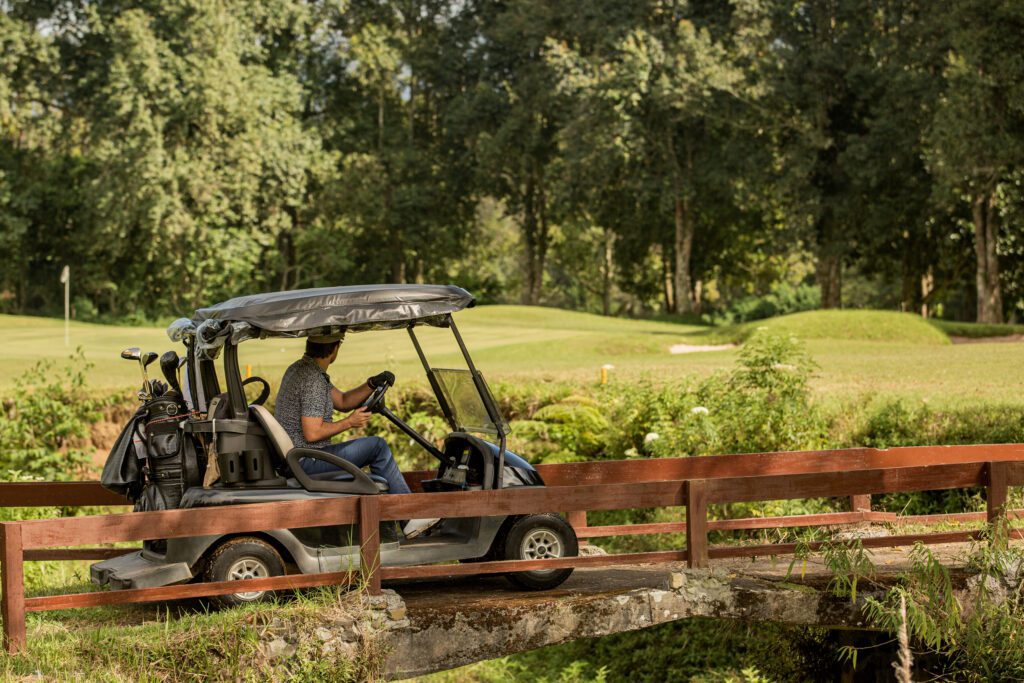
Auburn is known for its vibrant community, bustling campus life, and sprawling residential neighborhoods. For many residents, students, and visitors, golf carts and low-speed vehicles (LSVs) have become a popular, everyday mode of transportation. From navigating the busy tailgating areas near Jordan-Hare Stadium on fall Saturdays to taking a quick trip through the subdivisions off Moore’s Mill Road, these vehicles offer convenience and ease. However, they lack the heavy steel frames, airbags, and advanced safety features of standard passenger cars, leaving occupants highly vulnerable to severe harm in the event of a crash.
The most common causes of golf cart accidents in Auburn include distracted driving, operating the vehicle under the influence of alcohol, sharp turns leading to rollovers, and collisions with larger passenger vehicles. Inexperienced drivers navigating crowded tailgating areas or busy intersections also frequently contribute to these severe collisions.
Because golf carts are often viewed as recreational vehicles, operators sometimes fail to treat them with the same level of caution they apply to driving a car. This relaxed mindset can lead to dangerous behaviors, particularly in areas with heavy foot traffic or mixed-use roadways. A driver checking their phone while crossing Magnolia Avenue might fail to see a pedestrian or misjudge the speed of an oncoming truck.
Alcohol consumption is another significant factor, particularly during game-day weekends or community events. Driving a golf cart under the influence impairs judgment and reaction time just as it does in a standard vehicle. Furthermore, the physical design of a standard golf cart makes it highly susceptible to rollovers. Because they have a high center of gravity and relatively narrow wheelbases, taking a turn too quickly or navigating uneven terrain near places like Chewacla State Park can cause the vehicle to flip, frequently ejecting the occupants onto the pavement.
Most golf cart collisions in Lee County occur in residential subdivisions, apartment complex parking lots, mixed-use paths near the Auburn University campus, and along commercial corridors. Intersections where neighborhood streets meet faster, higher-volume roadways pose the greatest risk for catastrophic impacts with standard passenger vehicles.
The geography of Auburn naturally encourages the use of alternative transportation. Many large student housing complexes located off South Donahue Drive and Wire Road see heavy daily golf cart traffic. When these smaller vehicles share the road with delivery trucks, municipal transit, and hurried commuters, the risk of a collision rises exponentially. A passenger car turning into a parking lot may not anticipate a fast-moving golf cart emerging from a pedestrian pathway, resulting in a devastating broadside collision.
Residential neighborhoods are also common sites for accidents. In communities like Yarbrough Farms or the areas surrounding the Auburn University Club, residents frequently use carts to visit neighbors or head to the community pool. While the speed limits in these areas are relatively low, drivers backing out of driveways often suffer from reduced visibility and can easily strike a passing golf cart. Additionally, uneven pavement, hidden potholes, or poorly marked curbs in older neighborhoods can cause a driver to lose control.
Determining who is legally responsible for your injuries is rarely straightforward in a garbage truck case. The ownership structure of the vehicle often determines which legal rules and deadlines apply, and it can significantly affect how much compensation is available.
Many garbage trucks operating in the Auburn-Opelika area are owned by private waste hauling contractors. Large companies in this industry frequently carry substantial commercial liability policies, but their adjusters and legal teams are experienced at minimizing claims. If the truck was operated under a city or county contract, the City of Auburn or Lee County may share in the liability, depending on whether the accident involved negligent supervision, inadequate vehicle maintenance, or improper hiring.
If the garbage truck is part of the municipal fleet operated directly by city workers, your claim takes on an additional legal dimension. Under Alabama law, claims against government entities must comply with the Alabama Code § 11-47-190, which requires a six-month notice of claim deadline in certain municipal cases. Missing this notice requirement can extinguish an otherwise valid legal claim. A missed window cannot be reopened.
Specific areas with elevated risks include
Understanding the legal distinction between a standard golf cart and a street-legal Low-Speed Vehicle (LSV) is necessary for determining liability and insurance coverage after an accident. In Alabama, a traditional golf cart is generally not permitted on public roadways unless a specific municipal ordinance allows it. They are designed primarily for off-road use, lack essential safety equipment, and max out at very low speeds.
Conversely, an LSV is a legally defined classification of a vehicle that can travel at speeds up to 25 miles per hour. To be street-legal in Alabama, an LSV must be equipped with specific safety features, including headlamps, front and rear turn signals, taillights, stop lights, reflex reflectors, exterior mirrors, a parking brake, a windshield, seat belts, and a Vehicle Identification Number (VIN). Furthermore, the operator must possess a valid driver’s license, and the vehicle must be registered and insured in accordance with Alabama law.
When a collision occurs, the classification of the vehicle plays a major role in how insurance companies evaluate the claim. If an individual is operating an unregistered, non-street-legal golf cart on a public road like East Glenn Avenue and is struck by a car, the insurance adjuster will immediately attempt to use the cart’s illegal presence on the roadway to shift blame onto the victim. Conversely, if the accident involves a properly registered and insured LSV, the path to recovering compensation through traditional auto insurance policies is typically more straightforward.
After a golf cart crash in Auburn, immediately move to a safe location and call 911 to request the Auburn Police Department. Seek a medical evaluation at East Alabama Medical Center, document the scene with photographs, and gather witness contact information before speaking with any insurance adjusters.
The moments following an accident are chaotic, especially because golf cart occupants are completely exposed to the elements and surrounding traffic. If you are physically able, check yourself and your passengers for injuries. Even if you believe you have only suffered minor scrapes or bruises, it is highly recommended that you wait for emergency medical services to arrive. The adrenaline rush following a sudden impact can mask the pain of fractures, internal bleeding, or concussions.
Contacting law enforcement is a non-negotiable step. An official accident report from the Auburn Police Department or the Lee County Sheriff’s Office creates an objective record of the event. The responding officer will document the position of the vehicles, note weather and lighting conditions, and collect statements from the drivers involved. This report is foundational evidence when presenting a claim to an insurance company or a jury.
Key steps to protect your physical and legal well-being include:
Liability for a golf cart injury in Alabama may fall on the driver of a passenger vehicle, the operator of the golf cart, the owner of the cart under negligent entrustment, or the manufacturer if a mechanical defect caused the crash. Identifying all responsible parties maximizes the potential for recovery.
In many cases, the driver of a larger passenger car is at fault for failing to yield, speeding, or driving while distracted. If a truck runs a stop sign in a residential neighborhood and strikes a golf cart, the truck driver’s auto insurance policy is typically the primary source of compensation. However, liability can also rest with the operator of the golf cart itself. If you were a passenger in a golf cart and the driver took a turn too aggressively, causing a rollover, you may have a claim against the driver’s insurance.
Another legal concept frequently applied in these cases is “negligent entrustment.” This occurs when the owner of a golf cart allows someone they know—or should know—is unfit to drive to operate the vehicle. A common example in Lee County involves parents allowing an underage, unlicensed child to drive a golf cart around a subdivision. If that child causes an accident, the parents can be held legally responsible for the resulting damages.
Furthermore, if the accident occurred on commercial property, such as an apartment complex or a private golf club, premises liability laws might apply. If the property owner failed to maintain safe pathways, ignored deep potholes, or allowed overgrown landscaping to block visibility at an intersection, they may share responsibility for the collision.
Golf cart rollovers frequently result in traumatic brain injuries, spinal cord damage, complex bone fractures, and severe road rash. Because occupants often lack seatbelts, airbags, and a protective steel cabin, they are routinely ejected onto hard pavement or crushed beneath the weight of the vehicle.
The sheer lack of safety restraints turns what might be a minor fender-bender in a regular car into a life-altering event in a golf cart. When a cart flips, the heavy roof and battery carriage can land directly on the occupants. Crush injuries to the chest and pelvis are common and often require immediate surgical intervention. Victims transported to East Alabama Medical Center following a rollover frequently face long hospital stays and extensive physical rehabilitation.
Head injuries are particularly devastating. Even at low speeds, a strike to the head against the asphalt or the metal frame of the cart can cause a subdural hematoma or a severe concussion. Traumatic brain injuries can permanently alter a victim’s cognitive functions, memory, and emotional regulation, profoundly impacting their ability to work and maintain relationships.
Common physical traumas include:
Alabama is one of the few states that still applies the strict doctrine of pure contributory negligence. Under this legal standard, if a judge or jury determines that you were even one percent responsible for causing the accident that led to your injuries, you are completely barred from recovering any financial compensation from the other party.
This standard makes personal injury litigation in Alabama uniquely challenging. Insurance adjusters are acutely aware of this law and will aggressively search for any reason to assign a fraction of the blame to you. If a speeding car hit your golf cart, the defense might argue that you failed to use a turn signal or that your vehicle lacked the proper reflective tape required by local ordinance.
Because the margins are so unforgiving, preserving evidence and building a strong factual record is an absolute necessity. Your legal team must demonstrate that the other party’s negligence was the sole proximate cause of the collision. We thoroughly investigate the scene, secure surveillance footage from nearby homes or businesses along streets like College Street or Opelika Road, and retain accident reconstruction professionals when necessary to definitively prove fault.
The physical, emotional, and financial toll of a severe accident requires dedicated, focused attention. When you are forced to deal with mounting medical bills from East Alabama Medical Center and the aggressive tactics of out-of-state insurance adjusters, having a local advocate makes a profound difference.
At Alsobrook Law Group, we understand the specific nuances of Lee County’s legal system, the local roadways, and the complex laws governing low-speed vehicles in Alabama. We prepare every case with the meticulous detail required to overcome the hurdles of contributory negligence and secure the compensation our clients deserve.
If you or a loved one has been injured, contact our Auburn office today to schedule a free confidential consultation.

Zachary D. Alsobrook is a partner in the Opelika law firm of Alsobrook Law Group, where he concentrates his practice in the areas of criminal defense and DUI; divorce, child custody…
Standard golf carts are not required by Alabama law to have seatbelts, but street-legal Low-Speed Vehicles (LSVs) must be equipped with seatbelts that comply with applicable federal safety standards. If you are operating a registered LSV on a public roadway, all occupants must wear their seatbelts to comply with state and federal safety requirements.
No, driving a motorized golf cart or LSV on public sidewalks, including those on or near the Auburn University campus, is generally prohibited to protect pedestrians. Carts must remain on designated pathways or specific roadways, and operators must yield the right-of-way to students and pedestrians at all times.
Coverage depends heavily on the specific language of your policy and the classification of the vehicle. Standard auto policies often exclude unregistered recreational vehicles, but you may have coverage if the cart is a registered LSV, if you added a specific golf cart endorsement, or through your homeowner’s insurance policy.
If a drunk driver strikes your golf cart, you can pursue a personal injury claim against their auto insurance policy for your medical bills, lost wages, and pain. In cases involving extreme recklessness, such as a DUI, Alabama law may also allow you to seek punitive damages to punish the intoxicated driver.
In Alabama, the statute of limitations for personal injury claims is generally two years from the date the accident occurred. Failing to file a formal lawsuit within this two-year window will likely result in the court permanently dismissing your case, regardless of how severe your injuries are.
Yes, under the doctrine of negligent entrustment, a parent can be held legally and financially responsible if they allow an underage, unlicensed, or inexperienced teenager to operate a golf cart and that teenager causes an accident resulting in property damage or physical injuries.
Victims may be entitled to recover economic damages, such as current and future medical expenses and lost wages, as well as non-economic damages for physical pain, emotional distress, and diminished quality of life. In wrongful death cases, Alabama law permits the recovery of punitive damages.
It is highly advisable to consult with a lawyer before accepting any settlement offer. Initial offers from insurance companies are notoriously low and are designed to secure a quick release of liability before the full extent of your medical treatment and long-term prognosis is known.
The Alsobrook Law Firm is located in Opelika, AL and serves clients in and around Opelika, Loachapoka, Auburn, Salem, Waverly, Cusseta, Smiths, Barbour County, Bullock County, Calhoun County, Chambers County, Clay County, Cleburne County, Coosa County, Dale County, Elmore County, Henry County, Lee County, Macon County, Montgomery County, Pike County, Randolph County, Russell County, Talladega County and Tallapoosa County.
The information on this website is for general information purposes only. Nothing on this site should be taken as legal advice for any individual case or situation. This information is not intended to create, and receipt or viewing does not constitute, an attorney-client relationship.
No promises are made that services performed are greater than that of other lawyers.
No content on this site may be reused in any fashion without written permission from www.alsolaw.com
© 2024 Alsobrook Law Group. All Rights Reserved.