
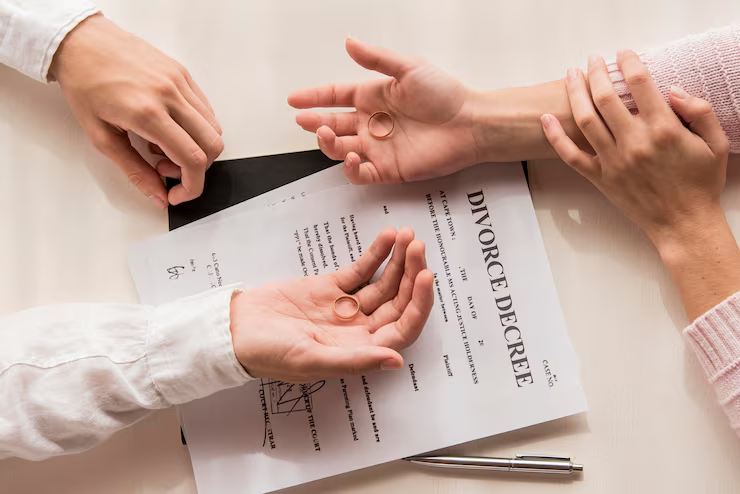
In many cases, yes. You can modify alimony payments in Alabama when your divorce decree awarded the right kind of support and your circumstances have genuinely shifted since the judge signed it. That answer matters to a lot of families in Auburn and Opelika. A faculty contract at Auburn University goes unrenewed. A manufacturing job along the I-85 corridor disappears. An ex-spouse in Smiths Station moves in with a new partner, and the monthly check keeps going out anyway.
Life rarely holds still after a divorce, and Alabama law recognizes that. It also sets firm limits on who can ask for a change, what they have to prove, and what a court can and cannot undo. Getting those limits wrong can leave you paying support you no longer owe, or losing support you still need.
Does the Type of Alimony in My Divorce Decree Decide Whether It Can Change?
Only rehabilitative and periodic alimony can be modified in Alabama. Under Ala. Code § 30-2-57, either type may be changed after a court finds a material change in circumstances. Alimony in gross, a fixed amount payable on a set schedule with a vested right to payment, generally cannot be modified, even if circumstances change dramatically.
Start with the paperwork. The label the judge used, and the way the payments are structured, usually settle the threshold question before anyone argues about income or need.
Alimony in gross works more like a property settlement than ongoing support. It compensates a spouse for giving up marital rights, and it comes out of the paying spouse’s existing estate rather than future paychecks. Because the recipient’s right to it has already vested, a later layoff or a new relationship does not reopen it.
Look for these clues when you read your decree:
- “In gross” or “lump sum” language: An express label is strong evidence the award is fixed.
- A stated total: A set dollar figure paid in installments over a defined number of months points toward a fixed award.
- No end-date conditions: A fixed award usually runs to completion regardless of what happens in either spouse’s life.
- “Rehabilitative” or “periodic” labels: These signal an award the court can revisit.
- Silence or mixed signals: When a judgment does not unequivocally show a fixed, vested award, Alabama appellate courts have declined to treat it as alimony in gross.
Many Lee County divorces end with a negotiated settlement agreement that the court adopts. The wording in that agreement carries real weight, so language drafted years ago in a hurry can shape what is possible today.
What Counts as a Material Change in Circumstances in Lee County?
A material change in circumstances is a substantial, continuing shift in either former spouse’s finances or needs since the last alimony order. It does not have to be unforeseen at the time of divorce. The spouse asking for the change carries the burden of proving it, and the judge still has discretion to deny relief.
Judges weigh the same core considerations every time: each spouse’s earning capacity, the recipient’s need for support, the payer’s ability to pay, and the estate each person holds. The real question is how those pieces have moved.
Changes that often support a request to modify alimony include:
- Involuntary job loss that lasts well beyond a short gap between positions
- A serious illness or disability that limits either spouse’s ability to work
- A significant, lasting increase in the recipient’s income, such as a new full-time career
- A substantial drop in the payer’s income that is not self-inflicted
Changes that usually fall short:
- Temporary dips, such as a slow sales season or a few weeks between jobs
- Circumstances that already existed when the divorce became final
- Events the settlement agreement planned for, like a career change both spouses discussed during negotiations
Timing matters too. When alimony comes from an agreement the spouses negotiated only months earlier, Alabama appellate courts apply close scrutiny to a request to change it. In one case, the Court of Civil Appeals reversed the termination of a rehabilitative award just 17 months after the divorce, finding the recipient’s part-time job did not justify ending support.
For an Auburn University employee whose contract is not renewed, or a Tiger Town retail manager whose store closes, the evidence has to show the change is real and ongoing. Pay stubs, termination letters, and job-search records usually carry more weight than testimony alone.
Can I Lower My Alimony If I Retire or Take a Lower-Paying Job?
Retiring or taking a lower-paying job can support an alimony reduction in Alabama, but only when the move is made in good faith. Courts ask whether the paying spouse had legitimate reasons for the change or was trying to escape the obligation. A voluntary pay cut made to avoid alimony usually fails.
Alabama courts do not force a paying spouse to stay in a punishing job forever. In Kiefer v. Kiefer, the Court of Civil Appeals upheld a reduction after a husband who had worked 60 to 80 hours a week for more than two decades cut back to spend more time with family. The court recognized that a former spouse may have to share in the hardship that follows a legitimate change of occupation.
The flip side is earning capacity. When a judge concludes someone quit or downshifted to defeat alimony, the court can look at what that person is able to earn rather than what they choose to earn.
Before approving a reduction, a judge will typically want answers to questions like these:
- Why did the change happen, and when did it happen?
- Do the paying spouse’s age and health support stepping back from work?
- Does the retirement fit a normal career timeline for that job or industry?
- What pension income or retirement assets remain available?
- How would a reduction affect the recipient’s ability to meet basic needs?
Timing your retirement around a pending alimony dispute rarely helps. A retirement announced shortly after a heated hearing invites suspicion. One that follows years of planning and matches the norms of your field is far easier to defend.
Can My Former Spouse Ask the Court to Increase Alimony?
Yes. A spouse receiving rehabilitative or periodic alimony can petition for an increase by showing a material change, such as a significant rise in the paying spouse’s income or a genuine increase in the recipient’s needs. Any increase still has to fit within the time limits Alabama law places on the original award.
Modification runs in both directions. Recipients in Opelika and Auburn sometimes assume the figure in the decree is a ceiling, but the standard that lets a payer seek relief also lets a recipient ask for more.
A raise or promotion for the paying spouse is not automatic grounds for an increase. Alimony exists to address the recipient’s need, so the evidence usually has to show that need has grown, too. Strong proof often includes:
- Medical records showing a new condition that raises costs or limits work
- Proof that a planned return to work fell through for reasons outside the recipient’s control
- Updated budgets showing rising, unavoidable living expenses
- Tax returns or pay records reflecting the payer’s current income
Courts also look at whether the recipient has made reasonable efforts toward self-support. A recipient who turned down available work will have a harder time convincing a Lee County judge that the payer should cover the gap.
Can Rehabilitative Alimony Be Extended Past Its End Date?
Rehabilitative alimony is capped at five years under Alabama law absent extraordinary circumstances. Periodic alimony generally cannot last longer than the marriage did, unless the marriage lasted 20 years or more. Extending an award beyond those limits requires strong proof that the original plan for self-support has failed through no fault of the recipient.
Rehabilitative alimony is meant to be a bridge. It gives a spouse time to finish a degree, complete job training, or rebuild a career after years out of the workforce, whether through coursework at Auburn University or a certification program closer to home.
When that plan stalls, the recipient may ask the court for more time. Judges want to see good-faith effort: enrollment records, job applications, and a clear explanation of why self-sufficiency has not arrived. A recipient who never started the program will find little sympathy.
Timing is everything here. A request filed after support has already run out may face serious jurisdictional problems, so recipients who see trouble coming should act while payments are still active.
Older decrees deserve a closer look as well. These duration limits came from Alabama’s 2017 alimony overhaul, and decrees entered before that law took effect may not follow the same framework.
Does Remarriage or Cohabitation End Alimony Automatically?
No. Remarriage or cohabitation does not end alimony on its own in Alabama. Under Ala. Code § 30-2-55, the paying spouse must file a petition and prove the recipient remarried or is living with a partner in a marriage-like relationship. The court then modifies the decree to terminate periodic alimony.
Remarriage is simple to prove with a marriage certificate. Cohabitation takes more work. The statute describes it as two adults living together continually and habitually while voluntarily taking on the rights and duties married couples usually share. A 2022 amendment made clear the rule applies whether the relationship is heterosexual or same-sex, and sexual relations are not a required element.
Casual dating or occasional overnight stays generally will not meet that standard. When a new partner moves into a home in Beauregard or Loachapoka, the evidence that tends to carry weight includes:
- A shared address, shown through mail, vehicle registrations, or driver’s licenses listing the same residence
- Commingled finances, such as joint accounts, shared utility bills, or split rent or mortgage payments
- Shared property titled or insured together
- Holding out as a couple at family events, on social media, or around town
Public records, social media posts, and testimony from people who know the couple often supply the proof. Gathering it before filing keeps the case from stalling at the hearing.
What Happens to My Alimony Payments While a Modification Is Pending?
Every alimony payment that comes due while a modification petition is pending remains owed in full. Alabama courts treat each missed installment as a final judgment on its due date, so a later reduction cannot erase past-due amounts. Stopping payments before a judge rules can lead to arrearages, interest, and contempt proceedings.
The rule comes from cases like Anderson v. Anderson, where the Court of Civil Appeals reversed a trial court that had excused two years of missed payments. Once an installment falls due, a judge cannot simply forgive it later.
That makes informal side deals risky. An ex-spouse who agrees by text to accept less can change their mind, and the payer may then owe the full difference. Any adjustment needs the court’s approval and a signed order.
Enforcement typically runs through Rule 70A of the Alabama Rules of Civil Procedure, and contempt of court in an Auburn divorce case carries consequences that reach well beyond the dollars owed. Filing promptly matters for the same reason. Every month of delay is another month owed at the old amount.
What If My Divorce Decree Didn’t Award Alimony at All?
If your Alabama divorce decree neither awarded alimony nor reserved the court’s power to award it later, the court permanently loses jurisdiction to grant rehabilitative or periodic alimony. A former spouse cannot come back years later and ask for support that was never ordered or preserved in the original judgment.
The exception is a reservation of jurisdiction. Sometimes one spouse clearly needs support at the time of divorce, but the other has no present ability to pay it. In that situation, the judge can hold the question open so a later petition remains possible.
The difference often comes down to a single sentence in the final judgment. Before assuming the door is closed, or open, request a certified copy of the decree from the Lee County Circuit Clerk and read the alimony provisions word for word.
Spouses negotiating a divorce right now should take the same lesson. Alimony terms, including any reservation, deserve the same careful attention as the division of the house and retirement accounts.
Will Changing My Alimony Affect How It’s Taxed?
It can. For divorce agreements signed after 2018, alimony is not deductible by the payer or taxable to the recipient. Older agreements keep the prior tax treatment, but a modification that expressly adopts the new rules shifts the payments to non-deductible, non-taxable status going forward. Review any change with a tax professional.
The risk sits in the drafting. Modification orders are often built from templates, and IRS Publication 504 ties the switch to specific language about excluding payments from the recipient’s income. One sentence can end a deduction the payer has counted on for years.
That gives the tax question real bargaining value. A recipient who would benefit from tax-free payments may push for the new treatment, while a payer may accept a modest reduction in exchange for keeping the deduction. Both sides should read a proposed order line by line before anyone signs it.
How Does an Alimony Modification Case Move Through the Lee County Circuit Court?
Alimony modification cases in Lee County are typically filed with the Lee County Circuit Court at the T.K. Davis Justice Center in Opelika. The former spouse is served and given a chance to respond, and many cases resolve through negotiation or mediation before a judge in the domestic relations division holds a hearing.
The courthouse sits at 2311 Gateway Drive and serves as the home of Alabama’s 37th Judicial Circuit. A typical case follows this path:
- Petition: The spouse seeking the change files a petition to modify, describing what has changed and the relief requested.
- Service and response: Beyond answering, the other spouse may file a counterclaim, such as a request for an increase or a claim for unpaid support.
- Financial disclosure: Both sides exchange income records, tax returns, and expense information.
- Settlement talks: Any agreement reached is submitted for the judge’s approval before it takes effect.
- Hearing: Without an agreement, the judge hears testimony and reviews the evidence.
- New order: The court enters a judgment that modifies, terminates, or leaves the alimony unchanged.
When a former spouse has moved to Phenix City, Columbus, or farther away, questions about notice and scheduling can slow things down. Sorting those issues out before filing keeps a hearing date from slipping.
Talk With Our Opelika Family Law Attorneys About Your Alimony Order
An alimony order is written for the life you had on the day your divorce became final. When that life changes, the order doesn’t change with it until a judge says so. Alsobrook Law Group helps paying and receiving spouses throughout Auburn, Opelika, and Lee County decide whether a modification is realistic, gather the proof a judge will expect, and present it clearly in court. You can learn more about how we handle alimony cases in Opelika.
We believe cost should never be a mystery. We’ll explain our fees and how your case would be handled before you commit to anything. Call 334-737-3718 or visit our office at 114 N 9th Street in Opelika to schedule a confidential consultation with our family law attorneys.
Frequently Asked Questions
Can my ex-spouse and I agree to change alimony without going to court?
You can negotiate new terms privately, and agreed cases often resolve through a joint filing without a contested hearing. That usually saves time and legal fees. The judge still reviews the terms before signing a new order, which is what makes the change enforceable.
Does alimony stop if either of us dies?
Yes. Rehabilitative and periodic alimony end upon the death of either spouse under Alabama law. Some divorce judgments require the paying spouse to carry life insurance to protect the recipient against that risk, and those provisions can be revisited in a modification case as well.
Can an Alabama alimony order be modified after my former spouse moves out of state?
Generally, yes. The Alabama court that issued the original order typically keeps authority over it, so a move to Georgia or elsewhere does not cancel the obligation or strip the court of power to change it. An out-of-state move can complicate notice and scheduling, however.
Does my new spouse’s income count when a court reviews my alimony?
A new spouse is generally not responsible for supporting a former spouse. Shared household expenses may still lower what the paying spouse actually needs to live on, and a judge may consider that when assessing ability to pay. The outcome depends heavily on the evidence presented.
Can I be ordered to pay my ex-spouse’s attorney’s fees in a modification case?
Alabama judges have discretion to award attorney’s fees in domestic relations cases, including modification and enforcement matters. Courts often weigh each side’s financial position, the result, and whether either party acted unreasonably. A petition built on weak evidence can end up costing more than the payments it targeted.
Can alimony be modified more than once?
Yes. A decree can be revisited as often as genuine changes occur. Each new request is measured against the most recent order in the file, so evidence already considered in an earlier round usually will not carry a new petition.
