
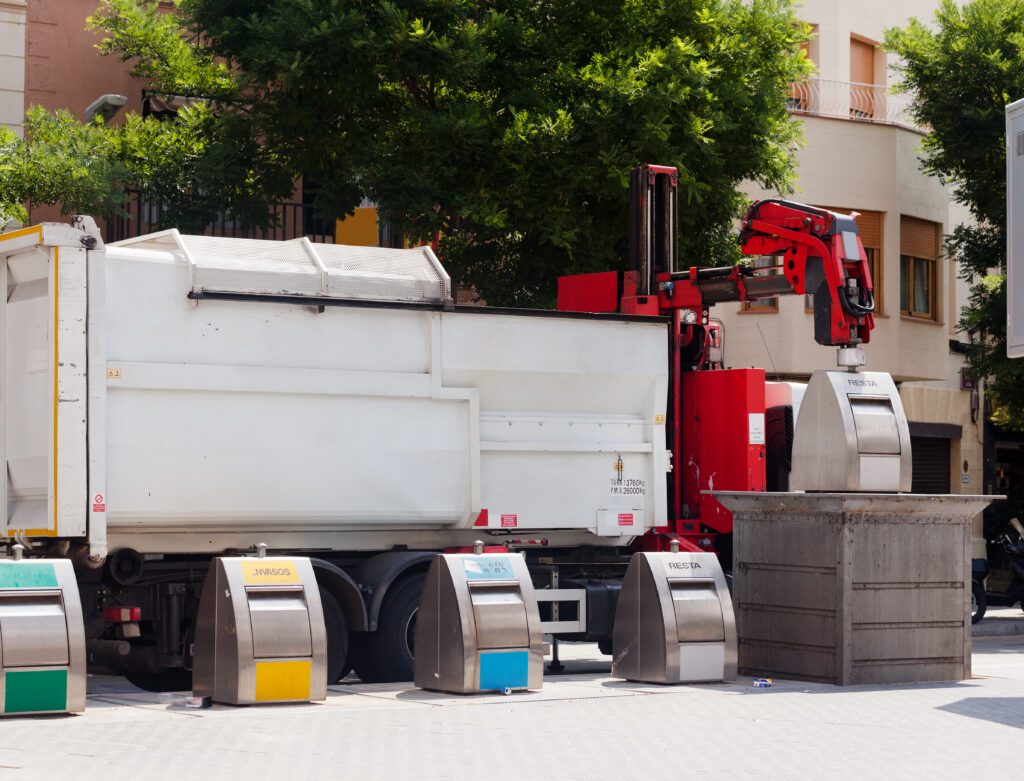
Garbage trucks are a fixture of daily life in Auburn rolling through the neighborhoods near Donahue Drive before sunrise, working the residential streets off Shug Jordan Parkway, and collecting waste from the commercial corridors near Tiger Town and the Auburn University campus. Their size and weight make them among the most dangerous vehicles on the road. When a garbage truck strikes another vehicle, a cyclist, or a pedestrian, the results are often catastrophic.
After a garbage truck accident in Auburn, call 911 immediately, seek medical care at East Alabama Medical Center or an urgent care facility, document the scene with photographs, collect witness information, and contact an experienced attorney before speaking with any insurance company or government representative. Acting quickly is essential.
The minutes and hours following a garbage truck accident are critical. If you are able, move to a safe location away from traffic on the roadway where the collision occurred. Even if your injuries seem minor, law enforcement must be called. An official police report from the Auburn Police Department or Lee County Sheriff’s Office establishes a formal record of what happened, which becomes foundational evidence in any future legal claim.
Medical attention should follow immediately. East Alabama Medical Center on Donahue Drive is the primary trauma facility serving the Auburn area. Even if you walked away from the scene, internal injuries, soft tissue damage, and concussions can go undetected without a professional evaluation. Gaps in medical treatment are one of the most common issues that insurance adjusters exploit to reduce or deny claims.
Before you speak with any insurance representative whether it is the carrier for the waste management company or an adjuster from the municipality contact an attorney. Statements made in the days after an accident can be used against you, and anything you sign prematurely can limit your recovery. The steps you take in the first 48 hours matter enormously.
Key actions to take at the scene and immediately after include:
Liability for a garbage truck accident in Auburn, Alabama, may fall on the truck driver personally, the private waste management company that employs them, the City of Auburn or Lee County if it is a municipal vehicle, or a combination of all three. Identifying every responsible party is critical to maximizing your recovery.
Determining who is legally responsible for your injuries is rarely straightforward in a garbage truck case. The ownership structure of the vehicle often determines which legal rules and deadlines apply, and it can significantly affect how much compensation is available.
Many garbage trucks operating in the Auburn-Opelika area are owned by private waste hauling contractors. Large companies in this industry frequently carry substantial commercial liability policies, but their adjusters and legal teams are experienced at minimizing claims. If the truck was operated under a city or county contract, the City of Auburn or Lee County may share in the liability, depending on whether the accident involved negligent supervision, inadequate vehicle maintenance, or improper hiring.
If the garbage truck is part of the municipal fleet operated directly by city workers, your claim takes on an additional legal dimension. Under Alabama law, claims against government entities must comply with the Alabama Code § 11-47-190, which requires a six-month notice of claim deadline in certain municipal cases. Missing this notice requirement can extinguish an otherwise valid legal claim. A missed window cannot be reopened.
Potentially liable parties often include:
Compensation in an Alabama garbage truck accident case may include medical expenses, lost wages, future lost earning capacity, property damage, and pain and suffering. In cases involving gross negligence, Alabama courts may also award punitive damages. The value of your case depends heavily on the severity of your injuries and the evidence preserved.
Garbage trucks weigh as much as 33 tons when fully loaded. When one strikes a passenger vehicle at any significant speed, the resulting injuries can be life-altering. Victims in these cases often require extended hospitalization, surgical intervention, long-term physical therapy, and in some instances, permanent accommodations for disability.
Alabama follows a contributory negligence rule, which is one of the strictest standards in the country. Under this rule, if a court finds you even partially at fault for the accident, you may be barred from recovering any compensation at all. This is why the quality of evidence gathered immediately after the accident — and the thoroughness of the legal investigation can determine whether you recover nothing or receive the full value of your claim.
Recoverable damages in a garbage truck accident case typically include:
Auburn is a city where residential neighborhoods sit close to active commercial routes. Garbage collection on the streets near Cary Drive, the subdivisions off Wire Road, and the apartment complexes along Magnolia Avenue requires trucks to operate in tight spaces at low speeds conditions that increase the risk of backing accidents and pedestrian strikes. The heavy volume of student pedestrians and cyclists around the Auburn University campus compounds this risk significantly.
The sheer scale of garbage trucks creates hazardous blind spots that are far larger than those of a standard commercial vehicle. A driver completing a collection at a dumpster near North College Street may not see a cyclist in the roadway before pulling forward. The rear loading mechanism presents its own dangers, particularly for sanitation workers and bystanders who are unaware the truck is preparing to collect.
Route schedules add another layer of risk. Collection trucks often operate under time pressure, particularly on high-density residential routes near Auburn’s growing neighborhoods. Speed, fatigue from early morning shifts, and pressure to finish routes can lead to the kind of inattention that results in a catastrophic collision on an otherwise ordinary Tuesday morning.
Alabama Code § 32-9A-1 et seq. governs the operation of commercial vehicles on state roads, and garbage trucks are subject to federal and state regulations regarding weight, maintenance, and driver qualifications. Waste haulers that operate large vehicles must comply with Federal Motor Carrier Safety Administration (FMCSA) regulations, including hours-of-service rules designed to prevent fatigued driving.
The statute of limitations for personal injury claims in Alabama is generally two years from the date of the accident under Alabama Code § 6-2-38. If the garbage truck was operated by a government entity, however, that window is complicated by notice of claim requirements that must be satisfied before filing suit. These shorter administrative deadlines run concurrently with the statute of limitations, and missing them is not a mistake that can be corrected after the fact.
Discovery in garbage truck cases goes far beyond a standard car accident investigation. Evidence that must be obtained quickly includes the truck’s electronic data recorder (black box), maintenance logs, driver qualification files, post-accident drug and alcohol testing results, and any GPS or route tracking data. Much of this evidence is subject to destruction after a period of months if not formally preserved through a litigation hold notice.
The injuries sustained in a collision with a garbage truck are often severe because the size and weight disparity between a garbage truck and a passenger vehicle is extreme. Victims frequently suffer injuries that require years of recovery or result in permanent impairment.
Traumatic Brain Injuries
The sudden, violent force of a garbage truck impact can cause the brain to move within the skull, resulting in a concussion, contusion, or more severe traumatic brain injury (TBI). Even in accidents where the occupant did not strike their head against the interior of the vehicle, the shockwave transmitted through the frame can cause significant neurological damage. TBI victims may experience chronic headaches, cognitive impairment, and personality changes that affect their ability to work and maintain relationships.
Spinal Cord and Back Injuries
Compression fractures, herniated discs, and spinal cord damage are common outcomes of high-impact collisions. A partial or complete spinal cord injury can result in permanent paralysis, requiring lifelong medical care and in-home assistance. Even lower-severity spinal injuries can prevent victims from returning to physically demanding occupations common in the Auburn area.
Orthopedic and Crush Injuries
Broken bones, shattered joints, and crush injuries to the extremities often require surgical intervention including implants, plates, and screws. Recovery timelines extend over many months, during which the victim is typically unable to work. In severe cases, amputation may be necessary.
Internal Organ Damage
The force of a garbage truck impact can rupture internal organs including the spleen, liver, and kidneys without any external sign of trauma at the accident scene. Victims who decline medical evaluation because they feel “fine” after the crash sometimes discover serious internal bleeding in the days that follow. This is why immediate medical assessment at a facility like East Alabama Medical Center is non-negotiable, regardless of how you feel at the scene.
At Alsobrook Law Group, we have represented injured Alabamians throughout Auburn, Opelika, Phenix City, and across Lee County. Garbage truck accident cases involve layers of complexity that most general practitioners are not equipped to handle from the FMCSA regulatory framework to the notice-of-claim requirements for municipal defendants. Our team handles every aspect of the investigation and litigation, from issuing evidence preservation letters on day one to preparing your case for trial if the responsible parties refuse to offer fair compensation. We handle garbage truck accident cases on a contingency fee basis, which means you pay nothing unless we recover compensation for you. There are no upfront costs, no hourly billing, and no financial risk to you for reaching out.
Contact us today at 334-737-3718 or visit our office near the heart of Auburn to schedule a free, confidential consultation. The sooner our team can begin preserving evidence and investigating the circumstances of your accident, the stronger your case will be.

Zachary D. Alsobrook is a partner in the Opelika law firm of Alsobrook Law Group, where he concentrates his practice in the areas of criminal defense and DUI; divorce, child custody…
In Alabama, you generally have two years from the date of the accident to file a personal injury lawsuit under Alabama Code § 6-2-38. However, if the garbage truck was operated by the City of Auburn or Lee County, a six-month notice of claim must be filed with the government entity before a lawsuit can proceed. Missing this administrative deadline can bar your claim entirely, which is why it is important to contact an attorney as soon as possible.
Yes, but claims against the City of Auburn or Lee County are governed by the Alabama Municipal Liability Act, which requires proper written notice to be filed within six months of the incident. These claims are legally distinct from standard personal injury suits against private companies, and the procedural rules are strict. An attorney who understands municipal liability law is essential to navigating this process correctly.
Alabama’s contributory negligence standard means that fault is heavily contested in many accident cases. However, garbage trucks are equipped with cameras, GPS tracking systems, and electronic data recorders that often tell a different story than the driver’s account. By securing this evidence early, our team can build a factual record that counters false narratives and establishes precisely what happened.
Pedestrians and cyclists struck by garbage trucks typically suffer the most severe injuries and have the strongest claims for full compensation. Alabama law requires all drivers, including commercial vehicle operators, to exercise reasonable care to avoid striking pedestrians. If the garbage truck driver failed to check mirrors, did not yield at a marked crosswalk near the Auburn University campus or a residential street, or struck you while backing without proper spotters, liability is generally clear.
Garbage truck cases involve federal motor carrier regulations, commercial insurance policies with higher limits, potential government liability, and significantly more evidence to gather and preserve. The trucking company or municipality will typically have experienced legal counsel working on their behalf from day one. Having an attorney who understands commercial vehicle litigation levels the playing field and ensures that critical evidence is not lost or destroyed.
Nothing unless we win. Alsobrook Law Group handles garbage truck accident cases on a pure contingency fee basis. You will not receive a bill for attorney’s fees unless and until we recover compensation for your injuries. The initial consultation is completely free and carries no obligation to proceed.
If a garbage truck accident resulted in a fatality, the personal representative of the deceased’s estate may bring a wrongful death claim under Alabama’s Wrongful Death Act. In Alabama, wrongful death damages are punitive in nature and are designed to punish the negligent party and deter future misconduct. These cases have the same two-year statute of limitations, and the same municipal notice requirements apply if a government entity is involved.
The most valuable evidence includes the truck’s onboard data recorder, any available dashcam or surveillance footage, driver logs and qualification files, vehicle maintenance records, GPS route data, post-accident drug and alcohol testing results, witness statements, and photographs taken at the scene. Much of this evidence is only preserved for a limited time before it is overwritten or discarded. Sending a formal litigation hold notice to the truck operator and any government entity is one of the first actions we take upon being retained.
The Alsobrook Law Firm is located in Opelika, AL and serves clients in and around Opelika, Loachapoka, Auburn, Salem, Waverly, Cusseta, Smiths, Barbour County, Bullock County, Calhoun County, Chambers County, Clay County, Cleburne County, Coosa County, Dale County, Elmore County, Henry County, Lee County, Macon County, Montgomery County, Pike County, Randolph County, Russell County, Talladega County and Tallapoosa County.
The information on this website is for general information purposes only. Nothing on this site should be taken as legal advice for any individual case or situation. This information is not intended to create, and receipt or viewing does not constitute, an attorney-client relationship.
No promises are made that services performed are greater than that of other lawyers.
No content on this site may be reused in any fashion without written permission from www.alsolaw.com
© 2024 Alsobrook Law Group. All Rights Reserved.